
Ecological Dynamics BIO/ESS 156, QSB/ES 256 (Spring, 2026)
< Back to Course Page
> To Course Schedule
Ecological Dynamics
BIO/ESS 156; QSB/ES 256
Undergraduate course: BIO/ESS 156
Graduate course: QSB/ES 256
Semester/Term: Spring 2026
Lecture time: Tues/Thurs 12-1:15pm
Lecture location: Classroom Office Building (COB2) 140
Instructor: Professor Justin D. Yeakel (use INBOX feature in Canvas)
Office hours: T 10-11 AM (SE1 288); F 10-11 AM (ZOOM)
I. Course Description
This conjoined undergraduate/graduate course provides an introduction to ecological dynamics through the development and analysis of theoretical models. Core topics include population growth (continuous and discrete), species interactions (competition and predation), perturbation and stability methods, life-history dynamics, planetary carrying capacities and coupled human–environment systems, probabilistic models of population and community dynamics (including stochastic processes and extinction), foraging theory, and ecological networks (structure and dynamics).
Students will use both analytical and computational approaches to interpret model behavior, connect models to ecological inference, and translate ecological questions into formal mathematical or simulation frameworks.
A substantial component for the graduate-version of the course is an independently chosen final project that synthesizes course concepts into an original theoretical investigation.
II. Enrollment, Prerequisites, and Undergraduate vs. Graduate Expectations
A. Prerequisite (BIO/ESS 156)
Prerequisite: BIO 12 OR BIO/ESS 148 OR BIO 005 + MATH 011 OR 021 or equivalent.
B. Criteria for Undergraduate Enrollment (BIO/ESS 156)
In order to enroll into the course, undergraduate students must have taken an Introduction to Biology course (BIO 12 OR BIO 005 or equivalent) and Fundamentals of Ecology (BIO/ESS 148 or equivalent), in addition to Calculus I (MATH 011 OR 021 or equivalent), and demonstrate satisfactory knowledge of basic ecology and calculus in accordance with the instructor’s expectations for the course. This course fulfills the upper-division quantitative elective requirement for many Biology tracks (see catalog for details).
C. Undergraduate vs. Graduate Expectations
This course is aimed towards advanced undergraduates as well as graduate students, and the requirements for completion are different for each group. Undergraduate students will be required to attend all lectures, complete all in-class quizzes, in-class and take-home activities, and in-class exams. Graduate students will have these same requirements, and in addition will be required to design and complete a final project that integrates the tools we have explored in this class into an exploration of their own design. This course fulfills a Quantitative or Ecology requirement for QSB.
III. Format and Procedures
- This course is structured as follows: 2x 1 hour and 15 minute lectures per week. Lectures will be interactive, involving both formal lecturing, discussions, and group exploration.
- Generally there will be weekly problem sets and/or short coding projects, both in-class and take-home.
- There will be unannounced scantron-based quizzes throughout the course (see Required Materials below).
- There will be three mid-term exams and a final.
- Graduate students in enrolled in QSB/ES 256: there will be a final project that will involve original research using tools from the class.
IV. Course Requirements & Grading Procedures
a. Class Attendance and Participation Policy
Students are expected to attend all lectures. It has been shown that a student’s performance in a course is closely coupled to their attendance.

b. Required and Supplemental Readings
Required Textbook:
Otto & Day, A Biologist’s Guide to Mathematical Modeling
Other required readings will be provided on the course schedule.
Course Website: http://jdyeakel.github.io/teaching/ecodyn156
c. Required Materials
- The book (see above)
- A name tag (placed at the front of your desk)
- A physical (non-digital) notebook with a writing tool is required
- You may bring a tablet/computer to class, but it will not be used unless specified
- A pack of scantrons
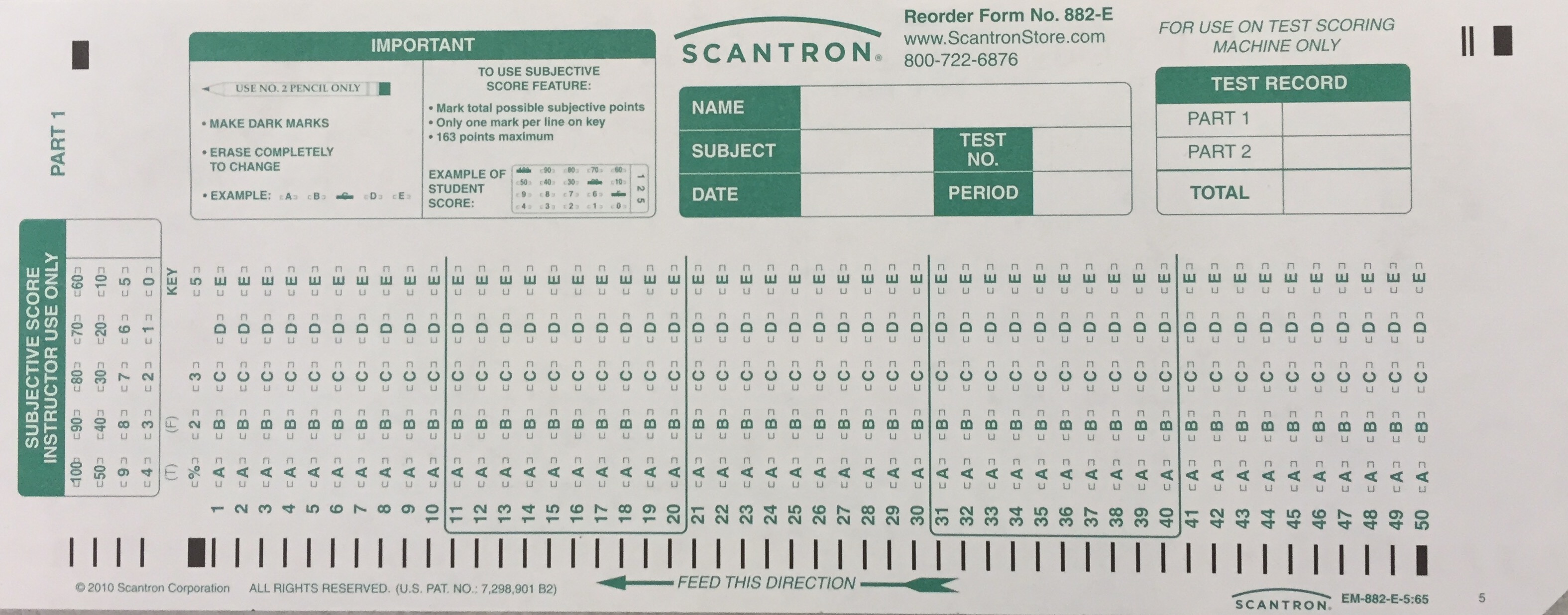 . A scantron may be needed at any time in the course.
c. Course Assignments and Projects
Assignments (including in-class and take-home activities) should be handed in on time. Late assignments will only be accepted that calendar week and will automatically receive one letter grade lower.
Attendance & Participation: Attendance is mandatory and in-person participation is required. I will drop the three lowest attendance/participation scores, which is meant to address issues that may not be under your control (such as an illness, etc). If the absence is for an excusable reason and you miss a quiz or in-class activity, the attendance/participation score will still count against the three-free rule, but the missed quiz/activity will not count against you. Note that an excused absence may require a doctor’s note or some other supporting document. For absences that are planned ahead of time, you’ll need to let me know in advance to receive any accommodations for missed work.
Activity Assignments: In-Class and Take-Home activities will be assigned and consist of both problem sets in theoretical methods and short coding projects that will introduce students to exploring ecological theory in a simple coding environment. The use of AI will be strictly controlled. Some activities (or parts of activities) will be analog and done without AI (particularly in-class activities). Others will be digital and allow the use of AI. Each assignment will clearly outline how AI is or is not to be used.
Quizzes: There will be multiple unannounced quizzes during the semester. These will generally involve the subject matter explored in the in-class or take-home activities.
Exams: There will be four midterm exams during the semester. If you are sick during an exam, please bring a note from your doctor verifying your illness. Missed exams based on an excused medical illness will be taken as soon as possible. There will be no early exams given.
Final Project (Graduate students only): Each graduate student will create a project during the course of the semester. These will be original research projects, and preferably deal with a subject that the student is interested in. These projects will necessarily have to be completable during the time period of the course. The student will first submit a summary of what the project aims to accomplish. Details regarding what the student will submit for the final project will be provided partway through the semester. The project will be graded on its originality, creativity, and findings.
d. Grading
Undergrad: Your final grade will be based on: lecture attendance/participation (10%), activities (30%), quizzes (30%), midterms (30%).
Grad: Your final grade will be based on: lecture attendance/participation (10%), activities (20%), quizzes (20%), midterms (20%), final project (30%).
Letter Grading Scale (subject to change): A: (90-100%); B: (75-90%); C: (65-75%), D: (50-60%), F: (<50%)
(BIO/ESS 156 grading note)
Normal Letter Grade only.
(QSB/ES 256 grading note)
Normal Letter Grade only.
V. Course Goals and Outcomes
a. Course Goals (BIO/ESS 156 and QSB/ES 256)
- Become familiar and comfortable with basic theoretical models in ecology and understand how these models are used to gain information about biological systems
- Interpret the strengths and weaknesses of theoretical models
- Learn how to interpret models both mathematically and graphically
- Learn how to formulate your own ecological questions into the framework of a theoretical model
b. Learning Outcomes (BIO/ESS 156 and QSB/ES 256)
General Learning Outcomes
- Critically analyze ecological models
- Know the basic operations of a programming language
- Analyze the graphical output of theoretical models
- Formulate their own research interests via a mathematical or computational model
Programmatic Learning Outcomes (BIO/ESS 156)
This course connects to the BIO learning outcomes by:
- Foundational knowledge (PLO 1): Providing a core background in a) population dynamics, b) ecological interactions, c) foraging theory, and d) probability theory. Connecting theoretical approaches to ecology with empirical approaches that use observational and/or experimentally derived data.
- Critical thinking (PLO 2): Examining both the utility and failings of mathematical models to describe natural systems. Using models to understand both qualitative and quantitative features of ecosystems, and linking the formulation of ecological models to environmental and conservation challenges faced by human societies in the Anthropocene.
- Tools and communication (PLO 3-4): Providing an environment where students will build and explore their own theoretical models, as well as interpreting and contextualizing the results of their models with respect to the ecological problem being investigated. A primary focal point throughout will be to translate theoretical models/findings into terms, concepts, and metaphors that can be understood by non-scientists.
This course connects to the ESS learning outcomes by:
- Foundational knowledge and major concepts (PLO 1-2): Providing a core background in a) population dynamics, b) ecological interactions, c) foraging theory, and d) probability theory. A central concept that will be taught throughout the course will be the ecosystem-level impacts of species-specific behaviors/patterns. Expanding basic ecological concepts, such as population dynamics, to major environmental/economical concerns, such as economically-sustainable conservation in fisheries.
- Critical thinking and quantitative knowledge (PLO 3): Applying theoretical principles to address environment-scale concerns, thus integrating fundamental biological principles controlling population and community dynamics to conservation and economic issues. Providing the opportunity to critically evaluate the constraints and limitations of theoretical models with respect to the real world.
- Written and communication skills (PLO 4): Providing an environment where students will build and explore their own theoretical models, as well as interpreting and contextualizing the results of their models with respect to the ecological problem being investigated. A primary focal point throughout will be to translate theoretical models/findings into terms, concepts, and metaphors that can be understood by non-scientists.
Programmatic Learning Outcomes (QSB/ES 256)
This course connects to the QSB learning outcomes by:
- Quantitative and Systems Biology (PLO 1): Providing a foundational understanding of theoretical models used to examine the quantitative traits of populations and communities. Establishing a basic understanding of probability theory to explore stochastic population and community dynamics. Emphasizing the formulation of theories/ concepts in a programming environment. Exploring and modified classical models via programming to gain intuition and understanding of the model at hand.
- Communication (PLO 3): Designing, evaluating, synthesizing, and reporting on an individually-chosen topic in theoretical ecology. The result of this research topic will be a unique final project that integrates the tools we have explored in this class. Throughout the latter half of the course, students will communicate their ideas and preliminary results with each other to refine approaches/conclusions of the final project, as well as the best way to communicate results.
- Scholarship and Research Ability (PLO 4,5): Providing a Discussion section topics in quantitative ecology are read, understood, and dissected.
This course connects to the ES learning outcomes by:
- Major Concepts and Principles: Providing a fundamental understanding of the essential processes used to construct theoretical models of populations and communities with an emphasis on environmental implications. Establishing connections between environmental and conservation-oriented processes (e.g. land use changes) to their potential ecological impacts through the lens of mathematical methods in biology. Emphasizing the links between population/community dynamics and human resource use.
- Applications and Analysis of Tools and Data: Describing, analyzing, and critically evaluating the benefits and drawbacks of different ecological models in qualitatively or quantitatively understanding dynamics at the individual-, population-, and community-scale. Emphasizing the confrontation between models and empirically-derived data, as well as the difficulties inherent to mapping theoretical observations to those made from observational or experimental data.
- Communicate Environmental Science Issues to a Wider Community: Building, exploring, and communicating an individually-chosen theoretical research topic with emphasis on communicating the problem, design, and results in a way that is approachable to a non-scientist. The result of this research topic will be a unique final project that integrates the tools we have explored in this class. Throughout the latter half of the course, students will communicate their ideas and preliminary results with each other to refine approaches/conclusions of the final project, as well as the best way to communicate results.
VI. Academic Integrity
Academic integrity is the foundation of an academic community and without it none of the educational or research goals of the university can be achieved. All members of the university community are responsible for its academic integrity. Existing policies forbid cheating on examinations, plagiarism and other forms of academic dishonesty.
a. Each student in this course is expected to abide by the University of California, Merced’s Academic Honesty Policy. Any work submitted by a student in this course for academic credit will be the student’s own work or clearly identified group work.
b. You are encouraged to study together and to discuss information and concepts covered in lecture and the sections with other students. You can give “consulting” help to or receive “consulting” help from such students. However, this permissible cooperation should never involve one student having possession of a copy of all or part of work done by someone else, in the form of an email, an email attachment file, a diskette, or a hard copy. Should copying occur, both the student who copied work from another student and the student who gave material to be copied will both automatically receive a zero for the assignment. Penalty for violation of this Policy can also be extended to include failure of the course and University disciplinary action.
c. During examinations, you must do your own work. Talking or discussion is not permitted during the examinations, nor may you compare papers, copy from others, or collaborate in any way. Any collaborative behavior during the examinations will result in failure of the exam, and may lead to failure of the course and University disciplinary action.
d. Examples of academic dishonesty include:
- using unauthorized materials during an examination
- plagiarism - using materials from sources without citations
- altering an exam and submitting it for re-grading
- using false excuses to obtain extensions of time or to skip coursework
e. Take responsibility for honorable behavior. Collectively, as well as individually, make every effort to prevent and avoid academic misconduct, and report acts of misconduct you witness to me.
- When an instructor specifically informs students that they may collaborate on work required for a course, the extent of the collaboration should not exceed the limits set by the instructor.
- Know what plagiarism is and take steps to avoid it. When using the words or ideas of another, even if paraphrased in your own words, you must cite your source. Students who are confused about whether a particular act constitutes plagiarism should consult the instructor who gave the assignment.
- Know the rules — ignorance is no defense. Those who violate campus rules regarding academic misconduct are subject to disciplinary sanctions, including suspension and dismissal.
VII. AI Use Policy
AI tools (e.g., ChatGPT, Claude, Copilot, LLM-based assistants) are permitted in this course only when explicitly allowed for a given activity or assignment. Unless an assignment states otherwise, you should assume that AI use is not permitted on graded quizzes/exams, and is restricted on take-home work to the rules below.
Allowed Uses (when permitted by the assignment)
- Brainstorming questions, hypotheses, and modeling approaches.
- Writing code from pseudocode you wrote to explore a problem.
- Debugging code, with the goal of understanding the fix.
- Improving clarity and organization of your own writing (not generating the substance).
- Summarizing sources you already located and read, to support synthesis (not to replace reading).
Not Allowed
- Submitting AI-generated text, code, math derivations, figures, or interpretations as your own without disclosure.
- Using AI to complete quizzes/exams or any “closed” portion of an assignment.
- Using AI to fabricate citations, data, results, or to claim you ran analyses you did not run.
- Uploading or pasting private course materials (solutions, exams, unpublished manuscripts, student work, or internal UC content) into external AI systems without explicit permission.
Disclosure Requirement (required whenever AI is used)
For any assignment where AI use is permitted, include an AI Use Statement at the end of your submission with:
- Tool(s) used and purpose (1–2 sentences).
- What you provided to the tool (e.g., your code snippet, your draft paragraph, your model equations).
- What you adopted, what you rejected, and how you verified correctness.
- If substantial: include key prompts and outputs in an appendix (or provide a link to a saved transcript if allowed).
Responsibility and Verification
You are responsible for the correctness of all submitted work. You must be able to explain and reproduce your results (including code behavior, derivations, parameter choices, and interpretations) without AI. The instructor may request a brief oral or written verification check for any submission.
Academic Integrity
Violations of this policy are treated as academic misconduct under campus policy. When in doubt, do not use AI and ask the instructor.
VIII. Accommodations for Students with Disabilities
The University of California Merced is committed to ensuring equal academic opportunities and inclusion for students with disabilities based on the principles of independent living, accessible universal design and diversity. I am available to discuss appropriate academic accommodations required for student with disabilities. Requests for academic accommodations are to be made during the first 3 weeks of the semester, except for unusual circumstances. Students are encouraged to register with Disability Services Center to verify their eligibility for appropriate accommodations. The instructor will make every effort to accommodate all students who, because of religious obligations, have conflicts with scheduled exams, assignments, or required attendance. Please speak with the instructor during the 1st week of class regarding any potential academic.